
Inside the Medicine Quality Monitoring Globe: tracking medicine quality risks in real time
A new study sets the development and the process powering the Medicine Quality Monitoring Globe, the interactive, online tool that maps real-time medicine quality reports in the media. As of October 2026, the system has captured 2.5 million articles.
More than 10% of medications in lower and middle income countries are likely to be substandard or falsified, and wealthier countries are not immune either. But the specialist equipment needed to assess the quality of medical products means that surveillance is difficult, and there is no central database that shares real-time incidence reports from regulatory agencies.
“We instead spotted an opportunity for tracking reports of substandard and falsified medicines, using a resource that already exists – the broad adoption of internet and electronic media reports,” says Dr Celine Caillet, who leads the Medicine Quality Research Group which produce the MQM Globe.
Building the tool
Taking inspiration from apps such as Radio Garden (a free online platform that lets you listen live to thousands of live radio stations from all over the world) and previous internet surveillance for real-time epidemic information, the team developed an open-source intelligence system that brings together online printed news reports in many languages, collates and curates them, and then makes them available for free via an interactive interface. Users can then explore these real-time media reports to identify emerging trends and risks in real-time.
“The signals that the Medicine Quality Monitoring Globe identifies are not replacements for formal surveillance systems, and are instead designed to complement them,” said Professor Paul Newton, the founding lead of the Medicine Quality Research Group.
The Globe monitors both lay press articles and gives access to open regulatory webpages about warning and recalls. The project was funded by Wellcome.
The MQM Globe scrapes the web, parsing and extracting information from websites, as well as acquiring online new reports from search engines such as Google News. It also uses direct RSS feeds from select sources, with multi-lingual search terms adapted to French, English, Spanish, Lao Vietnamese and Mandarin Chinese.
“This search step yields a lot of information – almost too much, since not all of it will be relevant,” says LexiGraph founder Clark Freifeld, a software engineer who led on the technical aspects of the development of the MQM Globe. “To avoid the search results getting overwhelmed with the same news report in different languages, or with irrelevant hits, we run the results from the searches through a deduplication process, and then a machine learning model that classifies the results as relevant or not.”
The MQM globe also georeferences the location of the media reports and applies standard data dictionaries so that researchers can find what they need despite variations in naming. Once the search results have been through the automated relevance classifier, staff native in Laotian Vietnamese, Mandarin and Spanish manually curate the results to further refine information in multiple languages.
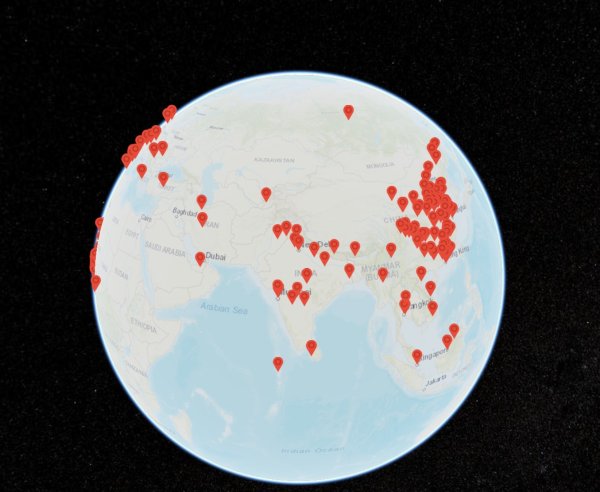
Users of the interface can filter the results to separately view press articles or regulatory alerts, and see where the incidents are happening on a globe.
An early warning system
The research team added a COVID-19 shortcut during the pandemic, and the United Nations Office on Drugs and Crime used the MQM globe data to illustrate how the trafficking of substandard and falsified medications expanded hugely early on in the pandemic.
More recently, the MQM globe tracked the emergence of children’s cough syrup containing deadly diethylene glycol, picking up press reports in India well in advance of regulatory authority alerts as the contaminated medication spread to Africa.
“We do think that the Globe can act as an effective warning system to prompt timely alerts and investigation of the veracity of the reports,” says Professor Newton.
The research team also suggest that this freely-available tool could help governments and procurement agencies in conducting due diligence and risk assessment checks before authorising imports into their country or agreeing to procurement contracts. They are continuing to work with the WHO, international organisations , national medicines regulatory authorities, and other researchers to improve the tool.
“We welcome suggestions on how to improve the system we have built,” says Dr Caillet.
Access the Medicine Quality Monitoring Globe.