Meet new WHO/TDR Fellow Dr Juan Sebastián Hurtado Zapata
We are pleased to introduce Dr Juan Sebastián Hurtado Zapata, who will be at IDDO for 12 months as part of the World Health Organization’s Special Programme for Research and Training in Tropical Diseases (WHO TDR). We host two WHO/TDR Fellows every year, as part of the capacity building that is integral to our mission.
Juan is one of two fellows who joined us in 2025 – find out more about Dr Nathalie Beloum, our other WHO/TDR fellow the same year.
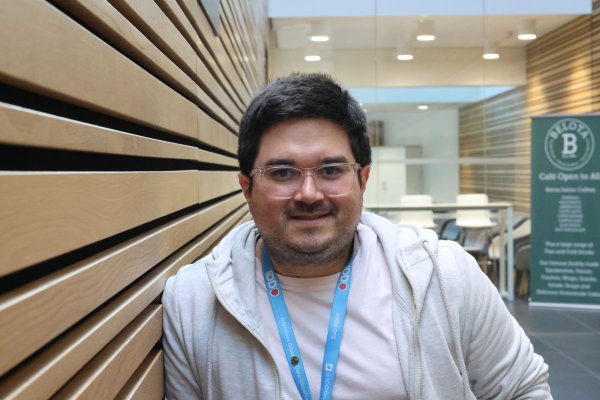
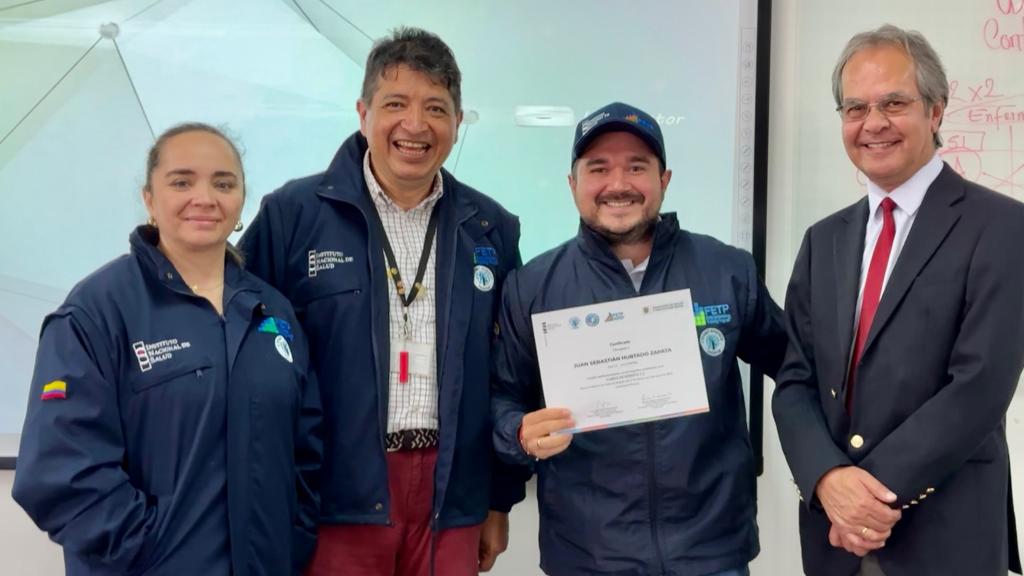
Juan is a medical doctor from Colombia and an epidemiologist at Universidad del Valle, with extensive experience in public health and infectious disease research. He is a qualified field epidemiologist, with specialist training from the National Health Institute of Colombia, supported by the CDC and TEPHINET.
Here Juan shares why he applied for the WHO/TDR Fellowship, the projects he is working on, and how he hopes this learning will shape his career and benefit his home institution and colleagues back in Colombia.
You are a researcher as well as physician, tell us more about your work.
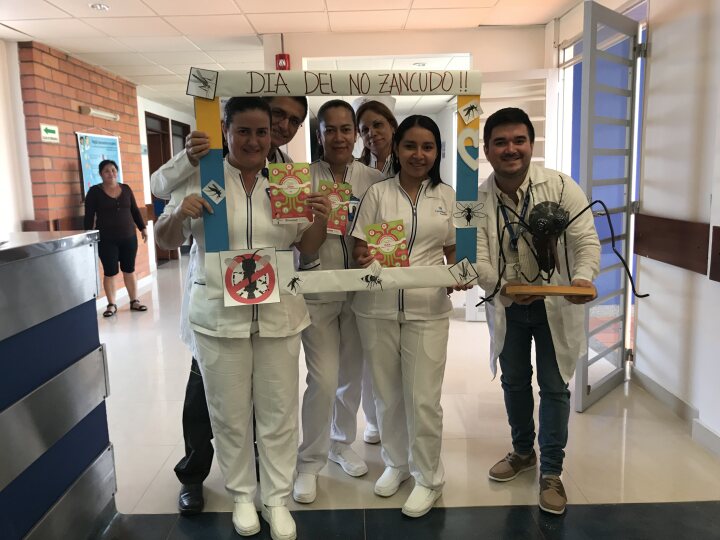
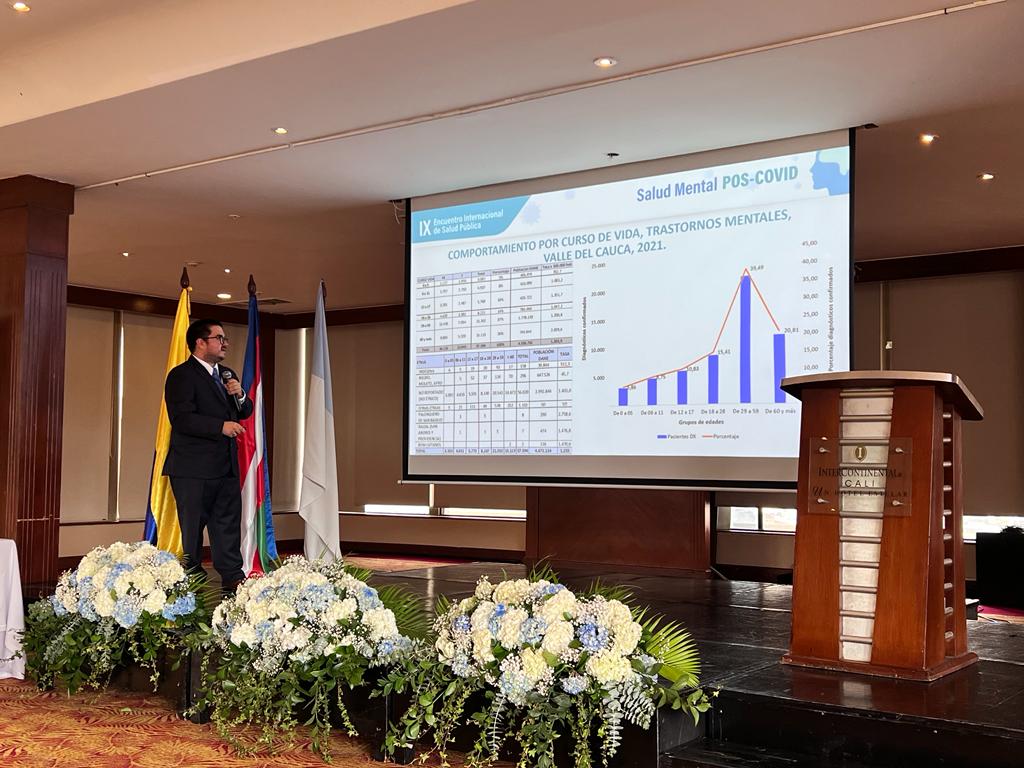
In 2021, I was a research assistant for the WHO Solidarity Trial Vaccine Project within the Centro Internacional de Entrenamiento e Investigaciones Médicas (CIDEIM), a Colombian private non-profit organisation which conducts research on infectious diseases. I went on to work on other CIDEIM projects, including collaborating with the Valle del Cauca Health Department (first administrative geographical division) to evaluate the epidemiological and microbiological behaviour of the dengue virus in Valle del Cauca, a diverse region in western Colombia.
I carried out biostatistical analyses of patient data for a US National Institute of Health-funded study on the prevalence of sexually transmitted infections in minority populations, specifically transgender women in Cali (the capital city of Valle del Cauca in Colombia). I identified factors associated with malaria recurrence in Colombian Indigenous and Afro-Colombian populations in Pueblo Rico, Risaralda, using epidemiological surveillance data.
In addition to research, I was a medical assistant in a high-complexity institution in Cali, Colombia. I have a special interest in and engage in activities related to stewardship, antimicrobial resistance, and clinical epidemiology.

Why did you apply for the TDR/WHO Fellowship?
I have always been concerned with the significant impact of infectious diseases, particularly on vulnerable populations in Colombia. This includes sexually transmitted infections, arboviruses and parasitic diseases such as malaria. The information physicians collect daily, or that is already available, can really help identify patterns and conditions related to pathogen transmission in a community, and they can also address gaps in timely disease detection. During the COVID-19 pandemic, I participated in many meetings about how to identify, prevent, mitigate and predict the disease’s impact. The constant flow of information and data underscored the need to use these effectively to evaluate existing interventions and identify indicators for more effective interventions. I now want to strengthen my applied expertise in using interdisciplinary data analysis tools to address public health problems with high social impact.
This is because routine surveillance data can be quite powerful – they’re mostly used to generate descriptive reports highlighting endemic channels and unusual trends, but inferential analyses of this data can identify critical risk factors needing immediate intervention, as well as uncovering important research questions to explore over the longer term.
I want to use this fellowship so that I can use data from my country’s public health surveillance systems fieldwork to evaluate structural interventions processes for diseases such as malaria, leishmaniasis and dengue. By using new analytical models, tools and data analyses, I hope to evaluate public health research gaps, and identify future research, using continuously updated, responsive data. I also plan strengthen my skills in data science statistical modelling and reproducible research. My goals are centred on:
- Learning how large international collaborations manage and analyse complex datasets
- Building bridges between IDDO and other collaborative groups with institutions in Colombia
What projects will you be working on during your time with IDDO?
My first project is on visceral leishmaniasis (VL) in Brazil, one of the countries most affected by this neglected tropical disease. VL is severe and often fatal if not treated promptly, and many of the affected patients live in remote or underserved areas. For this project, we are building a retrospective cohort using SINAN, Brazil’s national surveillance system. This includes all confirmed VL cases between 2007 and 2023. We are interested in the delay between symptom onset and the start of treatment, and how this delay is associated with the risk of death.
Public health bodies are generally aware that delaying VL treatment is detrimental, but they don’t have any specific information to guide them.
We want to find out how treatment delay differs across the population and varies by clinical and epidemiological variables such as geographic region, ethnicity, age, sex, etc. Identifying which groups are most affected by long delays between symptom and treatment will provide robust, region-specific evidence that Brazilian health authorities can use to improve case-finding, referral pathways and clinical management for VL.
Our analyses aim to answer questions such as when the delay becomes particularly hazardous, how the risk of death increases with each additional week of symptoms, and which groups are most affected, providing actionable insights that health authorities can actually use in their health policy decisions.
My second project evaluates artemisinin combination therapy (ACT) for children under five who have uncomplicated P. falciparum malaria, especially with higher parasite load. We already know that malaria treatments are more likely to fail in patients with very high parasite loads, and this may contribute to the spread of antimalarial resistance.
So here we are pooling individual patient data from many ACT clinical trials of uncomplicated P. falciparum malaria. We will use different methods and statistical models to unpick relationship between parasite density and the risk of malaria symptoms coming back. We aim to identify a parasite-density threshold above which patients have at least a 10% risk of treatment failure, and to estimate how common such high-risk infections are across different transmission settings and age groups.
A key issue is that many high-risk patients are currently unrecognised. ACTs are now part of standard treatment for uncomplicated malaria, but we still don’t fully understand how it works with extremely high parasite densities. By defining a clear parasite density threshold associated with high failure risk, we can help clinicians identify these high-risk patients who need more than the usual regimen. The WHO-defined threshold is that treatment failures exceeding 10% warrant consideration of new therapeutic options for standard treatment.
Both of these projects connect advanced data analysis with practical questions in real health systems. They both also tackle diseases that are very prevalent in many low- and middle-income countries. By transforming surveillance and clinical trial data into new evidence, both of these projects support better, earlier and more equitable patient care.
What are you most looking forward to over the next year?
I’m most looking forward to a mix of learning, connecting and settling in. Professionally, I’m excited to deepen my skills in advanced epidemiological methods, data science and statistical modelling, and becoming much more confident with large, complex datasets. I’d like to take full advantage of the seminars, workshops and course offered by University of Oxford - not just at IDDO but across the University. I am looking forward to learn new techniques and see how people from different disciplines think about infectious diseases and data
I’m also keen to get better at English, particularly in scientific writing and everyday chats, so I can share my ideas more effectively and engage more fully in discussions and collaborations. I’m also excited about the possibility of forming connections with mentors, colleagues and others. For instance, I’ve had the chance to meet Colombians working at the Pandemic Science Institute, with diverse roles and viewpoints on public health and epidemiology. I think this could really help me move towards new goals and propose ideas for the future.
Lastly, I’m looking forward to feeling more at home in Oxford: getting to know the city better, discovering my favourite spots to read or work and finding a good balance between my intense academic life and enjoying this unique experience.
How will this benefit your career and home institution?
This Fellowship will strengthen my skills in advanced epidemiological methods, data processing and analysis, and using innovative tools for large and complex datasets. It will give me hands-on experience in applying these methods to real-world infectious disease problems, and in working within an international, multidisciplinary research environment. These are essential skills for me to become a more independent researcher, able to design, lead and communicate data-driven projects, and to mentor others too. Overall, all of this helps me make a more effective contribution to evidence-based decision-making in infectious diseases and public health.
I plan to apply and share what I learn both within and beyond CIDEIM. The knowledge and experience gained during the Fellowship will help strengthen the Epidemiology and Biostatistics Research Unit, particularly in data management, analysis and the better use of existing data resources. By incorporating advanced epidemiological methods, deepening on data analysis techniques into our research protocols, we will be able to generate more robust evidence to inform interventions.
Together with this unit and the Research Promotion and Development Unit, I intend to disseminate what I have learnt through workshops, seminars and short courses. These capacity building efforts will enhance our institutional capabilities and help foster a culture of innovation, continuous learning and collaboration.
What is your first impression of Oxford?
I was struck by Oxford’s remarkable tranquility despite its academic vibrancy. Its many bicycles and pedestrians prompted a shift in my street crossing habits! Its efficient public transport system and the widespread use of buses means that everybody can get around easily regardless of their status, offering a sense of safety and quiet.
Coming from a warm, tropical climate, I’ve also been amused by how quickly the weather can change here. I’ve learned that leaving the house without an umbrella is something that never you must do! Another funny thing for me is how early many places close compared with Colombia; I’m used to doing things later in the evening, so discovering that shops and cafés may already be closing while it’s still light outside has been a small cultural shock. At the same time, I enjoy the mix of very old buildings and young students everywhere. I would like to explore more of Oxford beyond the main tourist spots: small cafés where people go to study or chat, quiet corners by the river, and the less known colleges or green spaces where you can sit and read. I’m also curious to discover more of the cultural life here local markets, music, maybe a bit of theatre and to understand better how the city changes with the different terms and seasons.
On a personal and professional level, I want to explore more of the academic environment: seminars in other departments, public lectures, and opportunities to meet people working on different aspects of global health and data science. I think these spaces are a great way to get new ideas, make connections, and feel part of the wider Oxford community, not just the place where I work.
And finally…
Looking back on the whole process—from planning the application to now being in Oxford—it feels like a long, thoughtful journey that suddenly became very real. Putting together the application made me pause and think about my work in Colombia and what I truly wanted to achieve in the next part of my career. Once I was selected, the focus shifted to more practical questions like visas, flights, accommodation and how to organise my responsibilities at home so I could make the most of this opportunity without leaving anything behind.
Arriving in Oxford was both exciting and a bit overwhelming: a new city, a new institution, new colleagues and, of course, a very different climate and pace of life compared with Colombia. What has really helped is the warm welcome from the team at IDDO and the feeling that people are genuinely interested in my background and where I come from. Little by little, I’m learning how things work here, from the bus routes to the coffee spots and seminar schedules. I am starting to build a routine that combines work, study and enjoying the city. For me, this year is not only about technical training, but also about adapting to a new environment, building connections and growing personally and professionally.