Our work
The WorldWide Antimalarial Resistance Network (WWARN)
Tracking, analysing and sharing data to fight antimalarial drug resistance since 2009
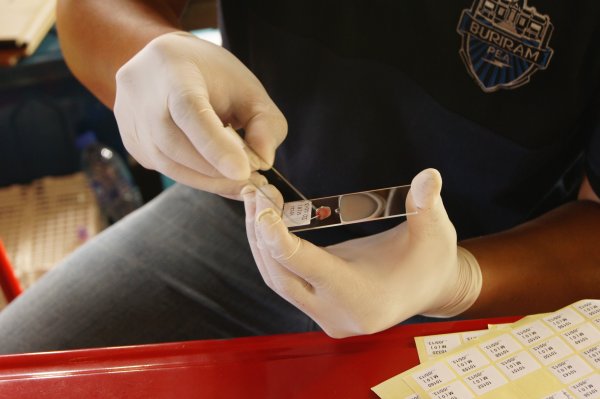
We provide curated, free-to-access, individual patient data from malaria studies conducted around the world: see the WWARN data inventory. By pooling data, this resource helps generate reliable evidence about antimalarial efficacy, enabling more informed health policy decision. We are a global platform, bringing together researchers across five continents working to improve patient health.
Our scientific work is organised into five main themes, guided by leading scientists worldwide. Co-leads in malaria-affected regions bring vital local expertise that helps turn global evidence into real-world impact.
- Antimalarial resistance: led by Professor Karen Barnes (University of Cape Town, South Africa) and Professor Mehul Dhorda (Mahidol Oxford Tropical Medicine Research Unit, Thailand)
- Vivax malaria: led by Associate Professor Rob Commons (Menzies School of Health Research, Australia) and Dr Najia Karim Ghanchi (Aga Khan University, Pakistan)
- Severe malaria: led by Dr Elizabeth George (University College London, UK) and Professor Daniel Ansong (Kwame Nkrumah University of Science and Technology, Ghana)
- Malaria chemoprevention: led by Dr Paul Sondo (Nanora Clinical Research Unit, Burkina Faso) and Dr James Watson (University of Oxford, UK)
- Malaria in pregnancy: led by Dr Stephanie Dellicour (Liverpool School of Tropical Medicine, UK) and Dr Abel Kakuru (Infectious Diseases Research Collaboration, Uganda).
This scientific work is supported by three methodological cross-cutting themes, led by Professor Jennifer Flegg, Professor Julie Simpson, and Professor Joel Tarning.
We turn data into better policy and treatment guidelines — because improved health policy saves lives. Our collaborative Study Groups gather around specific research questions and work to:
Researchers and regional partners identify urgent issues, such as treatment failures or risks to vulnerable groups.
We bring together individual patient data from relevant studies. Unlike aggregate results, IPD enables scientists to answer new research questions using pooled analyses, compare across studies, and generate stronger evidence.
- Pseudonymise rather than fully anonymise patient data — this makes governance more complex, but it preserves key scientific detail essential for high-quality analysis
- Harmonise data to international standards (CDISC) require or recommended by the regulatory agencies such as the US Food and Drug Administration (FDA), The Japan Pharmaceuticals and Medical Devices Agency (PMDA), China’s National Medical Products Administration (NMPA) or the European Medicines Agency (EMA)
- Preserve the context of each dataset so it remains usable long after a study is complete
- Store data securely to prevent loss years after study completion
- Make data freely available to any researcher
Because pseudonymised data is more scientifically powerful, our governance processes are especially important. With more than 15 years’ experience, we successfully:
- Balance the rights of data contributors while enabling data reuse
- Ensure compliance with complex legal and ethical guidelines (including EU GDPR)
- Provide a collaborative model where contributors can take part in research and receive credit for the use of their data
Our scientific expertise enables rigorous analysis, and we publish findings in leading peer-reviewed journals.
We share results and clear recommendations with guideline committees, ministries and policymakers to ensure evidence leads to better treatment strategies.
Our extensive library of resources include:
- Updated resistance visualisers and literature reviews
- Tools and protocols to helps researchers design more robust studies and share data more effectively.
These updates help identify further research gaps and crucial questions, while capacity building helps produce further studies that can feed into pooled analyses — completing the cycle and driving the next round of discovery.
Established in 2009, WWARN is a pioneering data-sharing framework that proved that it is possible to produce policy-changing scientific evidence from pooling existing data. It is now incorporated into the Infectious Diseases Data Observatory (IDDO), which extends WWARN’s approach to other infectious diseases. WWARN’s remit has expanded from considering antimalarial resistance data to other important research questions about malaria. It continues to produce work that has policy-changing impact.
Our regional Centres connect researchers, national programmes, and policymakers to strengthen malaria surveillance and accelerate the global response to drug resistance. Working across Africa and the Asia–Pacific, these centres networks, share data, and translate evidence into action.
In partnership with the MARC SE-Africa consortium, SEARC (led by Professor Karen Barnes) drives regional efforts to monitor and mitigate resistance. Activities include systematic reviews, “smart” surveillance pilots, and co-designed action plans. The centre also leads the WWARN Pharmacology Scientific Group, supports WHO TDR Fellows, and develops dynamically updated treatment guidelines in partnership with MAGICapp.
Based in Australia, this centre addresses the twin challenges of multidrug-resistant Plasmodium falciparum and the growing burden of P. vivax. It promotes harmonised data collection, applies pharmacokinetic/pharmacodynamic modelling to optimise dosing, and leads meta-analyses to improve radical cure strategies with primaquine and tafenoquine. The centre is led by Professor Julie Simpson and Associate Professor Rob Commons, who also engage researchers through study groups and training workshops.
With artemisinin resistance entrenched in Southeast Asia, the Thailand centre strengthens surveillance and research capacity in endemic countries. In collaboration with Mahidol University and MORU, it supports clinical trials, coordinates specimen management, and runs external quality assurance programmes to enhance laboratory standards worldwide. The centre is coordinated by Dr Mehul Dhorda and works closely with regional researchers.
The West Africa centre helps researchers implement surveillance strategies and adapt approaches to local contexts. It provides training in data and specimen management, advocates for sustainable funding and surveillance networks, and coordinates analyses of molecular markers, including sulfadoxine-pyrimethamine and ACT partner drugs. Regional leads Prof Oumar Gaye and Prof Magatte Ndiaye with WHO AFRO, WAHO, and the RBM West Africa Network to strengthen networks and capacity across the region.
Together, the centres foster collaboration, empower local researchers, and ensure high-quality data flows into global analyses — generating the evidence needed to guide malaria treatment policies and contain resistance.